What is research fatigue?
Research fatigue is a sense of exhaustion with participating in research, resulting in reluctance to participate in further research. Learn why it happens in this post...


Research fatigue is a sense of exhaustion with participating in research, resulting in reluctance to participate in further research (Clark 2008). It can occur after someone (or a group) have already been part of another research project (or many), or after an extended period participating in the same longitudinal research project (Clark 2008). It is often exacerbated when people have negative or disappointing experiences with researchers.
Research fatigue often affects populations who are studied often, who are more vulnerable, and who have high everyday demands on their energy and time. It is often correlated with the emotional exhaustion resulting from being marginalised or minoritised (Ashley 2021).
Sometimes research fatigue is reframed as a way for people to exercise agency and autonomy in an otherwise extractivist research process – by preventing or weakening research projects that may harm their own aims and goals (Rolin 2025). But if prospective participants decline every research opportunity, projects with more collaborative and reciprocal intentions will also suffer as a result, and therefore won't be as impactful for the communities they aim to support (Rolin 2025).
This post summarises the existing literature into research fatigue, focusing on social research, so you can keep it in your understanding when you design your own qualitative research projects. However, it's a difficult phenomenon to study. To get an understanding of research fatigue, researchers have to ask already research-fatigued people to participate in more research, which may skew the conclusions, as those most fatigued are less likely to participate (Ashley 2021). As a result, please take my conclusions with a grain of salt!
Why does research fatigue happen?
Participants may feel over-researched.
Research fatigue is often a result of 'over-research', in which a particular place, group or community is inundated with requests to take part in often very similar research projects, and the field is considered to be already saturated with existing studies and data (Button and Aiken 2022). Over-research can occur when a particular location or organisation is easy for researchers to access, due to proximity to campus or university partnerships (which is especially the case for graduate student projects) (Kelly 2021). Another factor is researchers following the research trends and funding opportunities, leading to many researchers coalescing in a niche but 'trendy' area of study (Neal et al. 2016). Over-research is particularly a risk when the group being studied is very small, so the same people are being repeatedly contacted for research (Ashley 2021).
Over-research itself is a contested term, as it implies that there can be too much research into any one topic. Some researchers argue that there can never really be too much research into any phenomenon (Neal et al. 2016). The term also assumes an inherently extractivist and imbalanced approach to research, where participants are passively being 'mined' for their stories and data, as opposed to being active agents in the research process (Neal et al. 2016). The subjectivity of the term can also result in communities being considered 'over-researched' prematurely, particularly if the term is being applied by researchers rather than the community themselves. This may ultimately disadvantage them from receiving any further academic attention (Koen et al. 2017).
Additionally, Aiken (2022) notes that not all over-researched places or communities experience research fatigue, and not all research fatigue is a product of over-research. In fact, attempting to mitigate research fatigue, whether by trying new methodologies in the same context, or trying similar projects in new contexts, can result in a greater sense of over-research as researchers might push ahead with a different (but still extractive) approach instead of considering ways to make research less exhausting for participants.
Participants have taken part in too many studies with similar questions, methodologies or topics.
People may receive many invitations to research projects which seem, to them, very similar on the surface (Clark 2008; Kelly 2021). This is particularly the case when participants are asked the same questions over and over again by different researchers. They may feel that researchers have not adequately read around their field to prepare for their project, which is disrespectful of their participants' time (Sukarieh and Tannock 2013). That said, not all studies result in publication, so it's not always possible to know what's been repeated in the published literature.
People may initially be curious about taking part in research as a novel and interesting experience (particularly if the methodology is unusual), but ultimately may become more apathetic "as the research process and all it offers (or does not) is revealed and de-mystified" (Clark 2008). This is particularly the case if the study designs are very similar (Clark 2008; Sukarieh and Tannock 2013; Kelly 2021).
People may also become bored engaging with specific research methodologies. No single methodology is an obvious 'culprit' here – even transformative research frameworks like participatory research can become boring to participants, particularly if they are invited to many participatory projects with a similar focus (Clark 2008; Kelly 2021; Sukarieh and Tannock 2013).
If a researcher has suggested that taking part would allow the participant to "give voice" to their experiences, participants may eventually feel 'drained dry' of their voice and experiences. They may feel they have nothing new to say to other researchers and that the benefits of giving voice have been exhausted (Sukarieh and Tannock 2013; Kelly 2021).
Past research projects failed to make any meaningful change to the person's life.
Many research projects are intended to build the evidence base for future policy changes, rather than being able to produce change on their own. As a result the wait for changes from a research project can be glacially slow, and it can seem like no change actually occurred as a result of participating in a project. If the researcher made lofty claims about the research's potential benefits, participants may feel their contribution was pointless and feel discouraged from taking part in future projects (Clark 2008; Rolin 2025; Broskevičová et al. 2024).
Change is also harder to come by in graduate projects. While more people than ever are in graduate training worldwide, graduate students' first research projects are sometimes viewed more as practical training for their future research than valuable studies in their own right (Kelly 2021). Because of their smaller scope, they may be less publishable or usable in policy decisions. So those who have participated in graduate projects may particularly feel that research doesn't make an impact on them, and seems to only benefit the researcher and their career advancement.
The research project is too demanding on participants' time or psychological/emotional resources.
Sometimes researchers ask for too much time and energy from participants, particularly if they don't understand that participants are already low on both (Ashley 2021; Rolin 2025). This can often be the case when working with vulnerable and marginalised communities with fewer resources and heightened stress as a result of "oppression [...] and lack of social support" (Ashley 2021).
Research fatigue can compound this sense of exhaustion. If a participant struggled with the emotional demands of previous studies (like recounting an upsetting event), they may carry this negative association to future studies, assuming all will be similarly exhausting and upsetting.
Some methodologies may also expect too much time of participants: especially longitudinal methods that require many interviews or surveys, or diary and photo-voice projects that may ask for many tasks to complete in a day. This can add up into a serious time commitment, and after starting the participant may feel reluctant to share that they are struggling with the time commitment around their other work or family commitments.
Participants may also fear the risks of public exposure, especially if they are from a marginalised identity that receives frequent discrimination. Button (2022) notes that "[t]here is [...] a risk to becoming seen and heard by policymakers and so ethics and safeguarding must be carefully considered. Raising awareness can be beneficial but it can also leave people exposed to detrimental change". A dangerous moment of exposure may lead people to avoid participating in future studies which could once again put them at risk. As a result, people may avoid future research projects where the time and emotional costs of participating – and the potential risk of harm – do not appear to be worth the potential benefits (Rolin 2025; Clark 2008).
Past or present research projects have not adequately compensated people for their participation.
Many people affected by research fatigue report a lack of adequate compensation for their participation, particularly if (as we discussed above) the research will take a lot of their time and energy (Rolin 2025). This can be challenging for researchers as, while compensation might not always be financial, it is still not always accounted for in research funding allotments (Clark 2008). Additionally, if one study offers a financial incentive, this can set a precedent that participants will expect future projects to meet (Button 2022). However, compensation is a complex issue and can reveal other inequities that lead to research fatigue.
People feel socially or economically pressured to participate.
People in particularly 'over-researched' and vulnerable groups can sometimes become reliant on financial incentives from studies as a source of income (Goodman et al. 2018). This can ultimately contribute to further research fatigue as they may feel economically exploited and pressured to continue participating in studies (Cleary et al. 2016). They may not feel they get to pick and choose which research they consent to, based on their own perception of the quality or intent of the study.
Even outside of financial incentives, people may fear social consequences or ostracism for not taking part. Sometimes people in organisations will feel pressured to participate in a study due to the expectations of their superiors (Broskevičová et al. 2024). People may also feel that they must participate in a study to avoid worse treatment than those who participate. Rolin (2025) suggests one example: "if the research project is concerned with health, participants may fear that they do not get adequate treatment unless they are willing to participate in a study".
All of these factors can lead to research fatigue as people may feel their consent to participate has been given under duress.
Past research projects were sometimes non-reciprocal, exploitative, extractive or with harmful outcomes, leading to distrust of other researchers.
This can happen on an individual level, where someone was harmed as a result of a previous research project. For example, they may have been insufficiently warned that taking part in an interview could be emotionally taxing and retraumatising (Rolin 2025; Broskevičová et al. 2024).
It can also happen when promises from researchers are broken, making the research more extractive than cooperative. Researchers may promise certain impacts from taking part, or promise that they will keep in contact with participants and share their research's results. If they then fail to keep these promises, this can result in participants feeling disrespected and exploited, and unwilling to participate in future studies by other researchers (Banki and Phillips 2022; Okune 2020; Zill 2022).
Research fatigue can also occur intergenerationally, when research has historically been used as a tool of oppression against a group the person belongs to. For example, many Indigenous populations were exploited by colonising researchers and studied repeatedly against their will, the results of which were then used to justify their subjugation (Goodman et al. 2018). This can ultimately result in distrust of future researchers' intentions and a sense of research as inherently exploitative.
What are the impacts of research fatigue?
Impacts to participants (and the researcher-participant relationship)
Quite simply, one of the biggest impacts of research fatigue is its harm to participants. Ashley (2021) calls it a "negative mental state" which has effects akin to "burnout". As we've discussed, the roots of research fatigue include that participants feel exploited, used or like their contributions are meaningless. Additionally, a participant may experience "disappointment and regret" if they wish to participate in an "important future stud[y]" but are ultimately too fatigued to do so (Ashley 2021). If previous research projects have exhausted and harmed participants, this can also worsen the relationship between researchers and the wider public, creating or entrenching negative feelings and distrust towards researchers (Sukarieh and Tannock 2013). This could result in people excluding themselves from research projects that could benefit them in the future (Rolin 2025).
Research-fatigued participants may also be more likely to become 'research savvy'. Rather than rejecting all invitations to studies, they might instead develop higher standards for the projects they participate in, and an ability to negotiate what they want in return for participation (Zill 2022; Neal et al. 2016). This could have a positive effect on research, as repeated participation may give people knowledge that allows them to prioritise working with researchers who seem willing and able to address their needs (and reject those whom they suspect to have ill intent). But it would be great if people could gain this type of knowledge without dealing with research fatigue first! Relying on 'research savvy' would also put onus on participants to reject inappropriate projects, instead of researchers making the effort to develop research processes that are respectful and empowering for participants. Aiken (2022) notes:
"It is also unfair to expect research subjects to be organised enough to adequately hold off pushy researchers, especially research on/with more marginalised people and places without the resources to cope with or the awareness of what is at stake."
Impacts to gatekeepers and other people who support participants
Research fatigue can also be experienced by gatekeepers and people who support specific communities. They might become exhausted by repeated or redundant requests for access (Okune 2020), reduced in their capacity and resources to help their community due to the requirements of ongoing research projects (Koen et al. 2017), or need to support participants in the aftermath of studies which fatigued or even harmed them (Broskevičová et al. 2024). All these consequences may ultimately result in them 'closing the gate' to future researchers.
 Cathy Gibbons
Impacts to the quality of research in present and future
If a community becomes research fatigued, this can have a compounding effect on researchers working in similar areas in the future, reducing the quality and impact of their research (Clark 2008; Cleary et al. 2016). Research fatigue is therefore important to address because it impacts our ability to create "socially valuable knowledge" in the future (Ashley 2021).
As research fatigue builds in a community, more people may refuse invitations to research, leading to an increase in selection bias (Ashley 2021). Of course, in qualitative, non-positivist contexts, having the biggest possible sample doesn't necessarily equal a higher quality research project, but it can still have a negative impact on the research if many people with diverse perspectives are declining all research invitations (Ashley 2021). This can even halt a research project entirely, if it was dependent on working with a specific person or community which the researchers could not recruit (Kelly 2021).
Researchers may also view research fatigue as a sign a community is over-researched, and therefore not work with them in future. This can disadvantage participants who do not actually feel over-researched, or areas where life-changing research is still badly needed (Koen et al 2017).
Additionally, research fatigue itself may impact the generalisability of results to other contexts and therefore the broader potential impact of the research. If people in a specific community become increasingly familiar with the research process, then the results are likely only to apply to other communities which are as familiar (and fatigued) with research (Koen et al. 2017).
Finally, the data gathering process can also be impacted by research fatigue. If participants are exhausted being repeatedly interviewed on similar themes – especially if upsetting – they may give rehearsed, less detailed or accurate answers, which may not give as accurate an insight into a problem (Myrsep 2022; Cleary et al. 2016; Koen et al. 2017).
In rare cases of high deprivation, participants may become reliant on study participation as a source of income, and lie about their eligibility for a study to ensure they receive the participation fee (Goodman et al. 2018). The primary cause of this is structural inequality and injustice, and is sometimes wrongly used as an excuse to not compensate participants for their time, but I can also see why this could be justifiable to a fatigued participant. If you contribute to many studies for which researchers exaggerated the potential positive impacts of participation or failed to keep their promises, then arguably you are just matching their dishonest and transactional approach with your own.
So research fatigue has knock-on effects for both participants and researchers, and can create or entrench inequities even when researchers attempt to design around it. Especially if you are working in a field that's very populated with researchers, the possibility or presence of research fatigue should be addressed in your study design and ethical review. In our next blog post we'll talk about ways to address, manage and mitigate research fatigue that are less extractive and more respectful of participants. Subscribe to our email newsletter for free to get updated when we have new posts.
You might also like to check out our textbook, Making Qualitative Research Happen, which explores more ethical issues in research and has a full chapter on academic extractivism and designing studies which are less exploitative of participants.
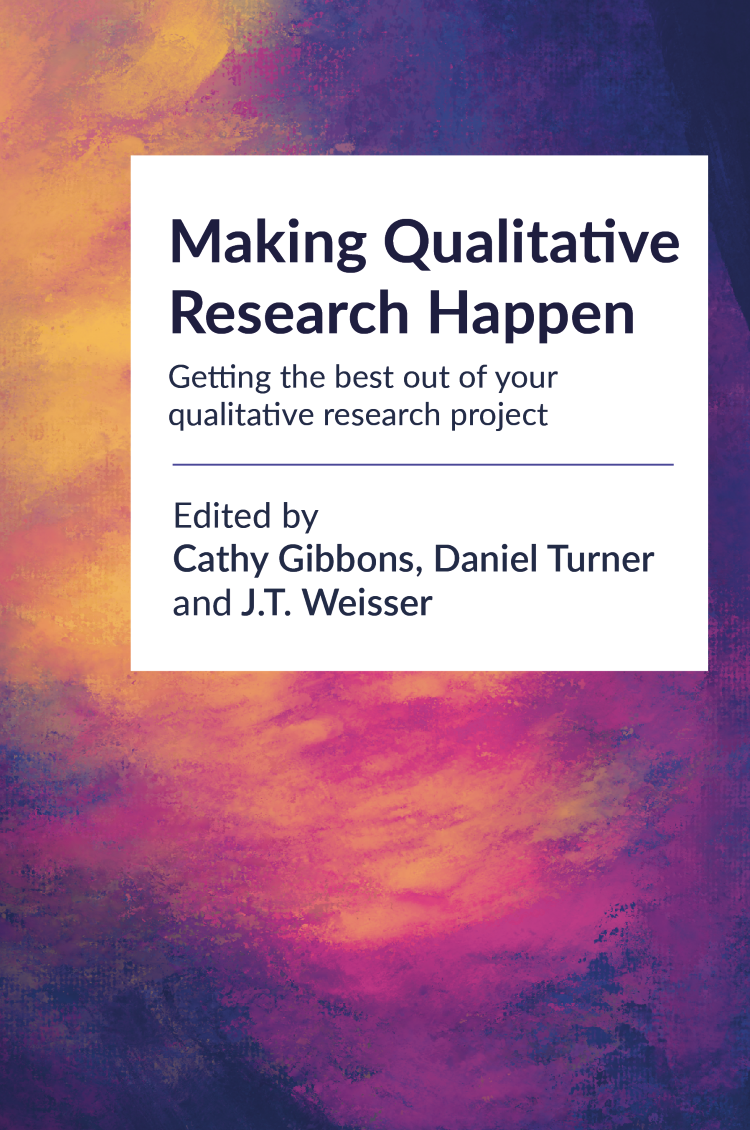
Order a physical or digital copy today!
Bibliography and further reading
Aiken, G. T. (2022). Towards a theory of over-researched places. In C. Button & G. T. Aiken (Eds), Over researched places: Towards a critical and reflexive approach (pp. 6–23). Routledge.Ashley, F. (2021). Accounting for research fatigue in research ethics. Bioethics, 35(3), 270–276.
Banki, S., & Phillips, N. (2022). Overcoming Over-Research: The MMP Approach. In K. Grabska & C. R. Clark-Kazak (Eds), Documenting displacement: Questioning methodological boundaries in forced migration research (pp. 309–337). McGill-Queen’s University Press.
Broskevičová, Z., Gřundělová, B., & Kowolová, I. (2024). “It Puts Them in the Role of Zoo Animals”: Gatekeeping, Research Fatigue and Over-Researched Populations in Czech Social Work Research. Journal of Social Service Research, 50(4), 548–561.
Button, C. (2022). Ghosts of researchers past, present and future in Mumbai. In C. Button & G. Taylor Aiken (Eds), Over researched places: Towards a critical and reflexive approach (pp. 57–69). Routledge.
Button, C., & Aiken, G. T. (2022). Over-research: What, why, when, where, how? In C. Button & G. T. Aiken (Eds), Over researched places: Towards a critical and reflexive approach (pp. 1–5). Routledge.
Clark, T. (2008). 'We’re Over-Researched Here!': Exploring Accounts of Research Fatigue within Qualitative Research Engagements. Sociology, 42(5), 953–970.
Cleary, M., Siegfried, N., Escott, P., & Walter, G. (2016). Super Research or Super-Researched?: When Enough is Enough… Issues in Mental Health Nursing, 37(5), 380–382.
Goodman, A., Morgan, R., Kuehlke, R., Kastor, S., Fleming, K., Boyd, J., & Aboriginal Harm Reduction Society, W. (2018). “We’ve Been Researched to Death”: Exploring the Research Experiences of Urban Indigenous Peoples in Vancouver, Canada. International Indigenous Policy Journal, 9(2).
Haggerty, J., Jacquet, J., Taylor, S., Theodori, G., & Walsh, K. B. (2020). Engaging in Energy Communities: The role of the researcher. A workbook and planning guide. Montana State University.
Kelly, G. (2021). Researching Over-Researched Societies. In R. Mac Ginty, R. Brett, & B. Vogel (Eds), The Companion to Peace and Conflict Fieldwork (pp. 47–63). Springer International Publishing.
Koen, J., Wassenaar, D., & Mamotte, N. (2017). The ‘over-researched community’: An ethics analysis of stakeholder views at two South African HIV prevention research sites. Social Science & Medicine, 194, 1–9.
Maar, M. A., Lightfoot, N. E., Sutherland, M. E., Strasser, R. P., Wilson, K. J., Lidstone-Jones, C. M., Graham, D. G., Beaudin, R., Daybutch, G. A., Dokis, B. R., Lesage, M. T., Raymond, M., & Williamson, P. (2011). Thinking outside the box: Aboriginal people’s suggestions for conducting health studies with Aboriginal communities. Public Health, 125(11), 747–753.
Myrsep, A. de B. (2022). ‘Research has killed the Israeli-Palestinian conflict’: Navigating the over-researched field of the West Bank. In C. Button & G. Taylor Aiken (Eds), Over researched places: Towards a critical and reflexive approach (pp. 81–99). Routledge.
Neal, S., Mohan, G., Cochrane, A., & Bennett, K. (2016). ‘You can’t move in Hackney without bumping into an anthropologist’: Why certain places attract research attention. Qualitative Research, 16(5), 491–507.
Okune, A. (2020). Open Ethnographic Archiving as Feminist, Decolonizing Practice. Catalyst: Feminism, Theory, Technoscience, 6(2).
Rolin, K. H. (2025). Resisting epistemic exploitation: From institutional remedies to community-based research. Studies in History and Philosophy of Science, 111, 63–71.
Sukarieh, M., & Tannock, S. (2013). On the Problem of Over-researched Communities: The Case of the Shatila Palestinian Refugee Camp in Lebanon. Sociology, 47(3), 494–508.
Zill, M. (2022). Confessions of an ‘academic tourist’: Reflections on accessibility, trust, and research ethics in the ‘Grandhotel Cosmopolis’. In C. Button & G. Taylor Aiken (Eds), Over researched places: Towards a critical and reflexive approach (pp. 133–148). Routledge.