Creative writing as a social research method

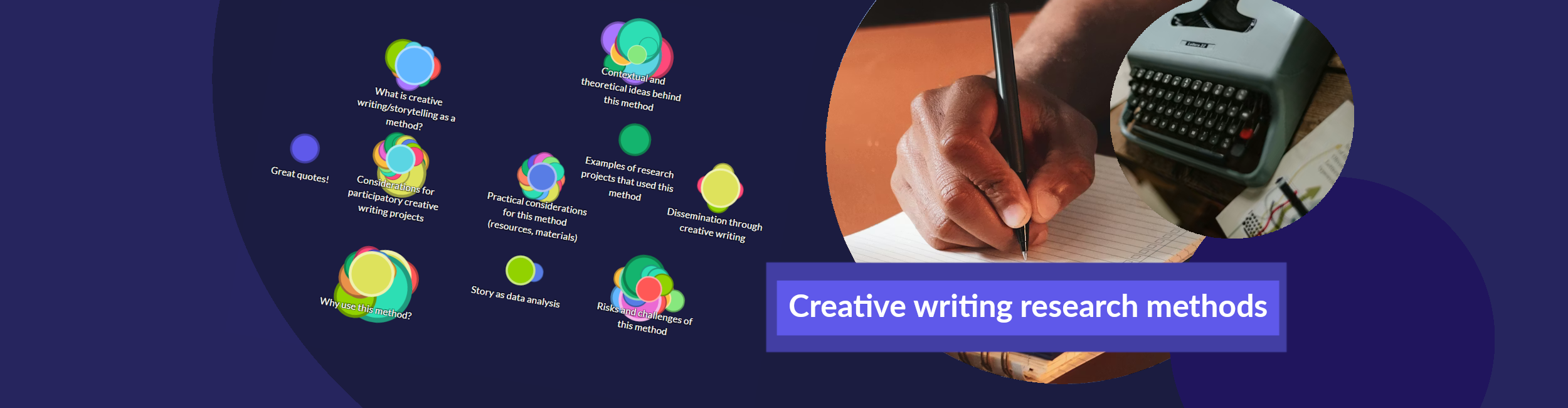
Is creative writing better suited than academic writing for exploring certain social ideas? Can we use it in a way that fits into academia, and is that something we necessarily want?
The intersection between arts, literature and social sciences has always been of interest to me. My start in academia was in English literature, while it was later as a professional that I undertook training in social research methods. Outside of my research, I'm also a creative writer. But I have often found, as many researcher-creatives have, that the boundary between my academic and creative writing is quite thin. Now that I have stepped away from academia, I realise I am still researching for my writing, but more loosely. Creative writing allows me to focus on the details I find most interesting and reach wider audiences, without the restrictions and inaccessibility of academic style.
What is creative writing?
For the purposes of this post, 'creative writing' is writing within forms that are typically associated with creative literature: narratives/stories (including creative nonfiction/memoir), poetry, plays, songs.
But what counts as 'creative'? Creativity is often defined as something that engages with the imagination (Zebracki et al., 2025). Creativity implies expression and originality, or at least the ability to play with existing ideas in a new way (Phillips and Kara, 2021).
But factual and academic writing can often be creative by this definition. When I'm talking about creative writing in this post, I'm referring to the surface-level form in which the writing is presented, and not closing off other writing forms from the status of being creative.
What is creative writing as a research method?
When used as an alternative research method, creative writing involves conducting research but breaking with usual academic styles and forms.
There are basically two branches of creative writing methods:
- Creative writing practice-based research: this is the type most typical in academic creative writing departments. Here the object is the production of creative writing itself (Kroll and Harper, 2013). Practice-based research explores the researcher's intent and experiences while producing the creative writing artefact. It could include research they did to prepare for the writing process (e.g. for a novel, interviewing people with the same background as the characters they wanted to create), the social context behind their creative artefact, and what it might mean for creative writing as a discipline.
- Creative writing as a social research method: This is where social researchers produce a creative writing artefact as part of their research. This often involves inviting participants to contribute their own creative writing, or the researcher recording their own perspective creatively as a form of autoethnography (a study of one's own position and experiences). The creative writing could be done at any point in the typical social research project - as part of the planning, data gathering, analysis and presentation of findings, or even all of the above. Sometimes the creative writing component will be in 'conversation' with the rest of the research project, which may be based in more conventional social science methods.
As a rule of thumb, practice-based research explores the academic implications of creative writing (the research is a by-product of the produced work), while creative writing as a social research method is writing creatively towards a more concrete purpose (the produced work is a by-product of the research). But I don't think the two can be as cleanly separated as some scholars have suggested (e.g. Kroll and Harper, 2013). To write this post, I researched both practice-based and social research-based creative writing methods, and I also kept in mind my own experiences as a scholar and creative writer.
History of creative writing as a social research method
Creative writing methods emerged in social research as a means to capture subjective, qualitative experiences more effectively than existing research methodologies which aimed for objectivity. Zebracki et al. (2025) place creative writing methods in the "so-called affective turn", because they can bring focus to "sensory experiences". Affect theory suggests that language cannot fully capture our subjective experiences, sensations and feelings – so the idea is that creative forms of writing might be able to communicate these feelings more effectively, if imperfectly.
Social researchers also wanted (and still want) to use creative writing because they felt it could confront some of the biases, elitism and bigotry in conventional academia. Feminist academics pushed for more transparent researcher reflexivity and positionality, where researchers acknowledge how their personal position can impact the results of their research (Phillips and Kara, 2021; Zebracki et al., 2025). The way academics consider reflexivity usually involves even more writing, in the form of reflexive journals and reflexivity statements. Yet it is not always helpful to approach reflexivity from the 'objective' stance of typical academic writing, implying it's possible to be impartial about your own subjectivity and biases. This ends up not being very different from positivist positions where the researcher attempts to maintain objective detachment from their subject matter (Zebracki et al., 2025). So creative writing is another way to approach reflexivity, by exploring the researcher's experiences and new perspectives they may have otherwise not considered.
Why use creative writing as a social research method?
Creative writing offers an insightful perspective that academic writing on its own cannot provide. Academic writing is not sufficient to encapsulate all the ideas in the world, and it falls short when it comes to discussing qualitative, lived experiences, due to the associated expectations to maintain detachment and scientific rigour. The arts in general has the capacity to fill those gaps, making a unique "contribution to knowledge" (Gandolfo, 2012). While this is the simplest way to explain the benefits of creative writing, I think the reality is probably less binary. We could say that some academic writing claims to be more objective than it is, and some creative writing can fill in those gaps.
Creative works can provide another type of truth, even when their contents are not 'real' (Brown et al., 2025). They can still provide valuable insight into the society in which they were produced, in ways that might not be obvious if you asked the writer for their opinions directly. It can be a good place to acknowledge nuances obscured by the restrictions of academic argumentation, where one may be expected to take a more definitive stance. Creative writing invites a more narrative and exploratory, 'unfolding' structure (Burlingame, 2019), which eludes the standard structure of most academic papers.
Compared against standardised research methods, creative writing is also seen as more honest about the messiness of real life, being more flexible and fluid (Holdstock, 2025). It's been called a queer method because it pushes the boundaries of what scholarship can be (Phillips and Kara, 2021). You could also connect it to post qualitative inquiry, where writing in its own right is elevated as a way to reach insight and meaning.
Creative writing can also serve as a 'complement' to more conventional social research methods. It can fill a gap that might highlight things people forget to talk about in an interview or focus group, or illuminate topics which are easier to approach from a sideways, creative angle (particularly if they are difficult to talk about more directly). But note that if creative writing is subordinate to a more conventional method, this can sometimes make creative writing seem just like a fun add-on to more 'serious' research, and not a method in its own right (Zebracki et al., 2025).
Benefits of creative writing as a researcher
There are many benefits to creative writing as a researcher, including:
- Being able to emotionally process and organise your research and your identity as a researcher – sometimes even providing "a form of catharsis" (Zebracki et al., 2025)
- This can be particularly helpful if you are exploring difficult subjects, where you may be more likely to develop compassion fatigue. Creative writing can function as a healthy outlet that preserves your own empathy towards the people you work with.
- Being able to solidify the learning you do as a researcher in a more memorable way (Phillips and Kara, 2021)
- Providing a window into your own reflexivity and positionality (Burlingame, 2019)
- Making you a better academic writer – practicing creative writing means you will pay more attention to the craft of writing, regardless of the form you're working in (Burlingame, 2019)
When it comes to creative writing as a researcher, this is closely intertwined with autoethnography, where the researcher studies their own lived experience. Most autoethnographic projects have a creative component as the point is to uncover the researcher's subjective perspective and "vulnerab[ility]" in ways that standard methods do not (Holdstock, 2025).
Benefits of creative writing for data collection and participatory projects
Creative writing can provide participants with more ways to express themselves - provided they are not forced to do creative writing if they don't want to. It can often help to work with multiple creative modes and methods depending on what participants find the most comfortable, although this can also add complexity to your data analysis.
Creative writing can also be useful if you are researching to produce social change, for example through participatory action research. Holding creative writing workshops as a research method could potentially create "ongoing[...] communit[ies]" that persist beyond your project (Schulz, 2006).
When exploring sensitive topics, creative writing can also have ethical benefits. Instead of revealing specifics about participants that could potentially identify them and cause them harm, you can preserve their anonymity in creative ways. They can speak through their own poetry or fiction. You could also work with participants to write Social Fiction, co-creating an example story pertaining to themes that came up in a research project, which does not reveal specifics about anyone who was involved (Brown et al., 2025).
In certain circumstances, creative writing could also be helpful when regular data collection is impractical, forming a way to "explor[e] what you do not know" and therefore what may have gone missing as a result of more 'standardised' research practices (Hemer, 2016).
Benefits of creative writing for research dissemination
Writing more creatively, with story and emotion in mind, can also be used to engage more people with your research. It's a way to more qualitatively explore your subject matter and engage people emotively, which academic writing, with its often inaccessible jargon, dry delivery and expectations of authorial detachment, frequently struggles to do (e.g. Hemer, 2016). So it can function as a vehicle for encouraging empathy (Gandolfo, 2012) for both participants and the broader community.
But if you are pursuing creative writing as a means of dissemination, especially if you're not co-creating the writing with participants, it's crucial to remember your "responsibility to try to represent participants and the knowledge they imparted to you accurately and respectfully" (Wilkinson et al., 2021).
 Daniel Turner
Having a creative writing practice as a social researcher
Whether you are doing a creative writing project with participants or solo, you should consider whether you are more interested in the act of writing itself, or the result of it (this will also indicate whether you're doing a more practice-based or social research-based creative writing project). This can impact the specific data you collect – if you're also going to collect notes, scribblings, drafts, as well as the finished product.
Phillips and Kara (2021) suggest treating creative writing as a form of play, a space for experimenting with concepts and looking at your topics of interest from new angles. It is not a place for strong restrictions and boundaries, although some self-imposed boundaries and restrictions can be helpful when you're stuck with the blank page. Many creative writing guidebooks will have useful prompts for this, but I've collated some prompts from Phillips and Kara and from my own creative writing practice below:
- Freewrite regularly. Decide how long or how much you're going to write, and then allow your writing to flow freely as a stream of consciousness, without a filter or inner critic. You can even write about not knowing what to write. The classic example is the 'morning pages' from Julia Cameron's The Artist's Way, where you write 3 pages (about 750 words, digitally) at the start of your day, with no restrictions on content or form. Cameron is pretty strict on how and when these should be written, whereas I would highly encourage adjusting this depending on what works best for you!
- Write the next entry in your research diary as a short poem.
- Describe what an ideal research day looks like for you.
- Look around you right now, set a timer for 5 minutes, and write down everything you can sense in your present environment. If you've done this exercise in the exact same setting before, you could add additional restrictions, like being restricted to only one sense, not being able to use certain letters, or only being able to describe things in metaphors.
- Use writing as an exercise in empathy: e.g. 'think about X, and imagine what they might be thinking and feeling.'
- Write from the perspective of an inanimate object personified - like your research paper.
- Use a piece of art you've been enjoying (whether literature, music, film, comics) as inspiration for your writing, perhaps spending some time with it before or during your writing session. Consider why you like it so much and what differentiates it from other pieces of art, for you.
Participatory creative writing projects
Usually, participatory creative writing projects involve a workshop (or series of workshops) dedicated to producing creative writing. To host these, you may want an established relationship with the group you're working with already (Zebracki et al., 2025). But sometimes it can be helpful if you are an unknown outsider, as participants may be more hesitant to share vulnerable creative expression with someone they already know well (Phillips and Kara, 2021).
When you start a creative writing workshop, you'll need to spend some time building rapport and trust - setting out ground rules for the session and including some icebreakers. From there you will probably want to consider a few different ways to tackle the writing itself:
- Participants write everything themselves.
- Participants collaborate on a single piece of writing (or split into groups that create one piece of writing each).
- Participants contribute to an existing piece of writing, or help to co-create a piece with the facilitator.
- Participants use pre-existing writing as a prompt for their own writing, or produce 'found' literature using snippets from existing writing (e.g. Schulz, 2006).
When participants are producing the work, you'll want to spend time in the workshops thinking about what the end product will look like - and what disseminating this research is going to look like. Do you want to present work visually? Publish a mini-literary journal or zine? Hold an event for performances and readings? Do participants actually want to share their work further? Do you want to spend time editing the writing of participants, and is that something they want you to do?
There are many other ways to do creative writing with participants. You could try a more hands-off, asynchronous approach for communities that already do a lot of writing by themselves (e.g. pre-existing communities of writers), providing writing prompts for people to respond to in their own time.
Consider as well incorporating other methods into the workshop format; for example, you could do a 'walking workshop' where people walk around an area as a group and write about the places they visit.
It's also worth considering if you can host a workshop online, or even offer an online-only session in addition to in-person sessions. This could make things more accessible to a broader sample if some people are unable to travel, have health concerns or job/caring obligations that get in the way of making the in-person times. Our tips for facilitating social research online could be helpful here too:
Daniel Turner
If you want to use creative writing workshops in your practice with participants, it is worth being aware of the power dynamic between you and your participants, which may be accentuated depending on your existing creative writing expertise. If you are also not so confident as a writer, and are taking part in the workshop alongside participants, this could mitigate (though not entirely demolish) this power dynamic. You might wish to collaborate with a more experienced creative writer who can do the bulk of the workshop facilitation. But note that this can create an additional layer of artistic 'authority' that might impact participants' creative voices. This impact could be positive or negative: a participant might feel more free to take "risks" because the facilitator is skilled at encouraging them to do so, while other participants might feel the restriction to produce work they think the facilitator will like (Zebracki et al., 2025).
Do you need to be a good writer to do creative writing as a research method?
Not necessarily. Phillips and Kara (2021) argue that your social research-based creative writing doesn't have to be 'good' in the same sense as an artistic work, and in fact as a creative researcher you should be asking questions about who gets to be creative and whose work gets to be valued as 'art'. These are pertinent questions to keep in mind when doing creative writing methods, and they're particularly important given the history of creative writing in academia.
The development of university creative writing departments in the US had a ripple effect on how creative writing is taught across the world. Many principles of 'good writing' still upheld today originated from Cold War-era attempts to defang creative writing as a form of protest, by degrading political commentary as an acceptable creative form (Bennett, 2015). So what gets counted as 'aesthetically good' is political, and in fact we could say that creative writing in social research comes full circle in consciously bringing social criticism back into the creative process.
But if you're looking to inject something more political into your creative writing research, you might want to look into our critical theory primer...
Jess Weisser
I believe that any writing that is produced by a person can be worthy of study and can provide insights into our social world. (Even writing produced by 'AI' large language models and procedural generation says a lot about the people that produced it, whose writing went into it, and their biases...)
Also consider whether you are placing too much stock in a 'successful' creative product at the end of the project. Creativity includes false starts, failure and things not going as planned (Smith and Henriksen, 2016). In many academic and professional worlds, we are trained to accentuate the positive in order to justify ourselves and our research as significant and fundable. This is why studies with results that seem more 'ground-breaking' are more likely to be published and gain the most attention, even if they are actually outnumbered by studies which showed no significant new results (see Brown et al., 2017). Creative works could be seen as a more honest way to approach research topics, being more intentionally exploratory and willing to experiment.
So, our own judgments of creative and artistic value are subjective and culturally relative. If we want to take creativity seriously as a medium of inquiry, that includes stepping aside from those value judgments and allowing it to be 'bad', by our own subjective definition. Remember that the creative process can sometimes be more important than the end product.
Analysing creative writing in social research
Analysing creative writing is an opportunity to place the creative work in context, consider its themes and explore its relevance to specific social and cultural theories (Crewe, 2021). Your analysis process may not look too different to the way you analyse other qualitative sources, like interview or focus group transcripts. You'll still need to read the text closely, have some way to organise your thoughts on it (whether that's qualitative coding or something else), and consider its place in context with the academic literature and other data you have gathered. Chilton and Leavy (2020) note that some creative writing research projects may indeed involve more 'typical' qualitative coding methods: e.g. open and axial qualitative coding, as seen in many forms of grounded theory. But there are some additional nuances to consider when you're analysing expressive and fictional texts, which we go into below.
You might also be creatively writing as a form of analysis, e.g. as a way to think around your findings from the project. This is common for Social Fiction projects (Brown et al., 2025), as well as autoethnography. But even in this case, it can be helpful to analyse the creative writing artefact as a form of reflexivity: understanding your creative intentions, whether they match with the execution of your work and the social and cultural influences that may have impacted your final work.
I would invite anyone doing analysis of creative writing, whether their own or other people's, to get quite granular about the specific language that was used, and why (and why not a different word, phrase, or sentence structure). Also consider the formal elements of what they did. If they wrote a story, what genre might it fit into and why? If they wrote a poem, does it conform to an existing form (like a haiku or limerick), or is it freeform? What does that reflect about what the writer was trying to capture?
I would also avoid settling on a meaning too soon, which is also good advice for any form of qualitative analysis. This is especially important for fictional narratives because they should not be taken literally or treated identically to factual data (see Hemer, 2016 for a deeper discussion on this). People will not always write creatively in ways that you expect or in ways that cleanly map onto their lives or personal experiences. Writers may in fact produce work that is more reflective of dominant biases and tropes they've seen in media, rather than their actual beliefs (e.g. see Gandolfo, 2012, who discusses needing to consciously break with "dominant discourses" to produce feminist creative writing). When you are co-producing creative writing as part of a research project, you probably don't want to 'over-correct' and try to restrict what participants (or you!) write in the hopes they will do what you expect them to.
Of course, a key part of analysing creative writing can come in the form of narrative analysis: analysing the stories and narratives we tell and what they say about our lives and perspectives. Narrative analysis is usually applied in the context of narrative interviews, where people are encouraged to share their life story and literary works or broader societal narratives may be used as a 'comparison' against a person's self-narrative. We go into this in much more detail in our textbook for qualitative research, Making Qualitative Research Happen, which also includes a section by Helen Kara on creative research methods. Kara co-wrote Creative Writing for Social Research, an incredibly valuable reference for this post which goes into much more detail on this subject!
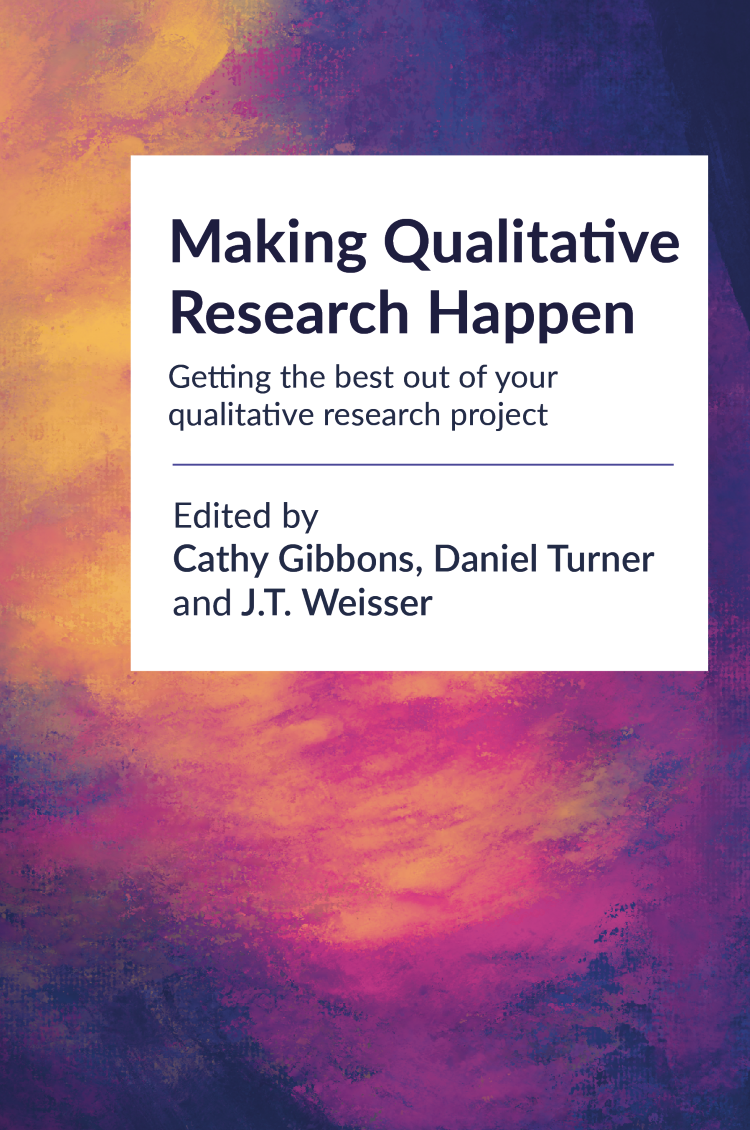
Order a physical or digital copy today!
Risks and challenges of creative writing as a social research method
Creative writing won't be the best fit for every research project. With participatory projects, it will generally work the best if participants are already receptive to writing creatively. Not everyone is going to want to be part of a creative study, and in fact many people may not enjoy the process of creation as much as they may have expected. Some people may also not feel able to or safe to express themselves in writing (Phillips and Kara, 2021). So one thing to consider is whether you actually need creative writing at all – or if oral storytelling and improvisation could be included in your project as another form of creative literature.
Collaborative writing projects could also open up the roles available in the workshop. For example, if participants are writing a film or play, perhaps some people could instead act or provide a more supportive role in the production. Of course, if you are getting participants to produce a work collaboratively, this also invites the possibility of the group dynamic dominating over people's individual perspectives, which may diverge from the group but never get heard in the final work (Phillips and Kara, 2021).
With more autoethnographic projects where the investigator is producing the creative work, this could result in similar problems to post qualitative inquiry, where the researcher's perspective is prioritised to the exclusion of everything else. This could ultimately result in an academic work that is so specific to your own experience that it cannot be used in any other contexts. We explore this more in our blog post about post-qualitative inquiry:
Jess Weisser
There are potentially methodological issues with creative writing too. Using creative writing exclusively may not be helpful if you are trying to get it to do things it can't do. Creative writing is great at providing an abstracted view of people's emotional worlds and experiences - if you have an experiential question like "how does X group of people process Y?", it's going to be helpful, versus a question where you are searching for concrete solutions to problems (unless the solution you're testing is more creative writing workshops!).
Finally, just like any research project, creative writing can't provide a complete picture of any phenomenon. It cannot produce perfect representations even if, with its capacity for expressing complex emotions, it appears to get closer than academic writing. Claiming creative works are always more 'authentic' than academic writing may not be the best solution, versus acknowledging the limitations of representation honestly.
Ethical problems with creative writing in social research
Ethical risks can apply to any research but especially those that involve sensitive topics: creative writing requires a certain degree of vulnerability, which also poses a greater risk for emotional harm. Creative writing can be surprisingly emotionally taxing, particularly if the work in question was inspired by or elicits negative emotions, or forms a reflection on difficult subjects or trauma. Creative writing departments also struggle with this, and have debated how to balance this emotional risk alongside being able to still develop and critique the work of the writers in their programs (e.g. see Perry, 2010).
With creative writing workshops in social research contexts, you usually wouldn't be teaching craft in any painstaking detail, so you have a lot more flexibility in how the workshop is run and how to preserve a sense of safety. But it still might feel anxiety-inducing or upsetting to share writing in a workshop, particularly if participants have had negative experiences in similar environments (Phillips and Kara, 2021). Skilled facilitation can be helpful here, where you are supportive of people setting their own boundaries on what they'd like to be shared (either with the group or more widely), and the type of feedback they'd like to receive on their work (if any).
There are also risks relating to confidentiality and privacy. Creative writing offers a greater chance to reach wider audiences compared with academic writing, but the risk of a participant being identified is much greater, particularly if they are publicly presenting their own work. You should ensure that participants understand the implications of disseminating their work more widely, and give them the choice of anonymisation, opting out from any public events or outputs, or the option to participate in the dissemination of the research in a different way (Wilkinson et al., 2021). If they do want to remain anonymous, they should have the option to specify any changes they would like to make to their work, or any parts they are not happy to be shared more widely.
The confidentiality requirements of workshops might also be easier to break compared with a more formal focus group. This could put participants at risk of their sensitive personal information being revealed by other participants. Thus it should be signalled to the group that nothing should be shared outside the workshop without express consent (Phillips and Kara, 2021).
External barriers to creative writing in social research
There are also, unfortunately, biases against creative writing in social research which reflect the status of creative methods as a whole. Creative writing as a research method is often seen as less reliable and valid than more conventional and more acceptedly 'scientific' methods – so it is sometimes difficult to use creative writing and still be taken seriously as a social researcher. The produced work is not always seen as "academic enough" by academic publishers or authorities (Zebracki et al., 2025). You may have to spend more time justifying the work's status as a valid form of research to appease academic authorities, limiting the time you can spend on actually highlighting the work's unique insights.
Even if it's important to your project to publish the full creative work, not all research journals will accept this. Many journals do not accept creative writing and some will only accept academic commentary of the work, and not the work itself. So, again, the creative writing could remain subordinate to more standard forms of research dissemination, limiting its impact.
The good news is that the acceptance of creative writing as a research method is growing over time. You won't have to look too hard to find publications that are receptive to the academic value of creative writing, including journals on creative methods in social research contexts. But you may struggle if you are trying to reach academic audiences beyond those who are already receptive to the benefits of creative writing research, as there will be additional hurdles to jump.
Although this may sound discouraging, I still think creative writing is a worthwhile pursuit for any researcher – even if you don't use your creative work in the final research output. It can be fun, challenging, and allow you to see so much of the world and your own research from a fresh perspective. I hope that if more research projects are willing to use creative writing, academic writing will become more inclusive, accessible, and invested in engaging audiences beyond just the project's original specialism. And, of course, I'm hopeful that it will encourage the arts, social sciences and humanities to talk to each other more!
Software for analysing creative writing
As well as producing educational resources on qualitative research, we make the qualitative analysis software Quirkos, which can help you to organise and analyse a wide range of qualitative data (including creative prose, scripts, and poetry) using a flexible and simple interface. Our canvas of codes offers a flexible and colourful way to organise your ideas as you read through the writing produced as part of your project.

We offer free Quirkos licences for participatory workshops, so if you are holding a writing workshop with participants, you can get them involved with the analysis of creative writing at no extra cost. Just like participatory creative writing workshops, this could allow participants to have a stronger voice across the whole research process.
You might be wondering, is qualitative coding software compatible with creative research methods? You may want to read one of these articles to learn more:
Jess Weisser Anuja Cabraal
 Daniel Turner
Have you used creative writing in a social research project? What would you like to see from our next blog post on creative methods? We'd love to hear from you! You can get in touch with us on any of our social media platforms (Mastodon, LinkedIn, YouTube).
References and further reading
Bennett, E. (2015). Workshops of Empire: Stegner, Engle, and American Creative Writing During the Cold War. University of Iowa Press.
Brown, A. W., Mehta, T. S., & Allison, D. B. (2017). Publication Bias in Science: What is it, why is it problematic, and how can it be addressed? In K. H. Jamieson, D. M. Kahan, & D. A. Scheufele (Eds), The Oxford Handbook of the Science of Science Communication (Vol. 1, pp. 93–101). Oxford University Press.
Brown, N., Ergül, H., & Power, N. (2025). Social Fiction: Bridging academic enquiry and creative writing. Journal of Creative Research Methods, 1(1), 97–117.
Burlingame, K. (2019). Where are the storytellers? A quest to (re)enchant geography through writing as method. Journal of Geography in Higher Education, 43(1), 56–70.
Chilton, G., & Leavy, P. (2020). Arts-Based Research: Merging Social Research and the Creative Arts. In P. Leavy (Ed.), The Oxford Handbook of Qualitative Research (2nd edn, pp. 601–632). Oxford University Press.
Crewe, J. (2021). Creative writing as a research methodology. New Vistas, 7(2).
Gandolfo, E. (2012). Constructing imaginary narratives: Practice‐led research and feminist practice in creative writing. Qualitative Research Journal, 12(1), 61–74.
Hemer, O. (2016). Writing and Methodology: Literary Texts as Ethnographic Data and Creative Writing as a Means of Investigation. In N. Wildermuth & T. Ngomba (Eds), Methodological Reflections on Researching Communication and Social Change (pp. 161–182). Springer International Publishing.
Holdstock, S. (2025). Creative writing and autoethnography: A layered approach to exploring positionality. Pedagogy, Culture & Society, 33(4), 1163–1178.
Kroll, J., & Harper, G. (Eds). (2013). Research methods in creative writing. Palgrave Macmillan.
Perry, G. (2010). Potentially Dangerous: Vulnerabilities and Risks in the Writing Workshop. In D. Donnelly (Ed.), Does the Writing Workshop Still Work? (pp. 117–129). Channel View Publications.
Phillips, R., & Kara, H. (2021). Creative writing for social research: A practical guide. Policy Press.
Schulz, J. (2006). Pointing the Way to Discovery: Using a Creative Writing Practice in Qualitative Research. Journal of Phenomenological Psychology, 37(2), 217–239.
Smith, S., & Henriksen, D. (2016). Fail Again, Fail Better: Embracing Failure as a Paradigm for Creative Learning in the Arts. Art Education, 69(2), 6–11.
Wilkinson, C., Brookes, L., Benwell, M. C., Evans, B., Davies, A., Carter, B., Langridge-Thomas, G., & Silverio, S. A. (2021). Creative dissemination. In N. Von Benzon, M. Holton, C. Wilkinson, & S. Wilkinson, Creative Methods for Human Geographers (pp. 379–390). SAGE Publications Ltd.
Zebracki, M., Diamand, E., & Greatrick, A. (2025). Creative writing as critical fieldwork methodology. Qualitative Research, 25(3), 648–671.